
Mortise and Tenon Joints |
 |
 |
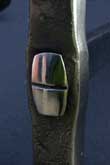 |
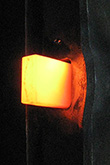
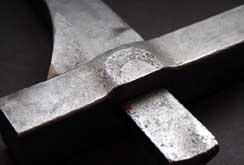
A mortise and tenon joint is a traditional blacksmithing method of joining metal that is both inherently strong and visually very expressive. It is a relatively time consuming joint to make but can be used as feature detailing. The photo essay below explains how it is made.
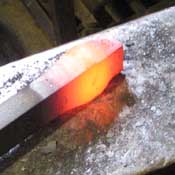
The first stage is to form a swelling near the end of the bar. This is done using very localised heating and a process called upsetting.
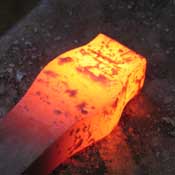
The swelling is then hammered flat, pushing metal towards the sides. This will form the wide shoulders on the tenon that give it strength.
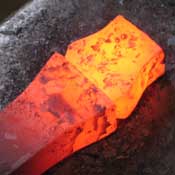
A groove is formed all around the swelling, this is referred to by blacksmiths as "butchering" and prevents the shoulders from distorting when the tenon is forged
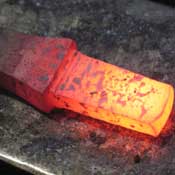
The tenon is roughly formed by drawing out (hammering) the metal in front of the groove.
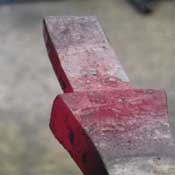
Then tenon is finished by squaring up its shoulders.
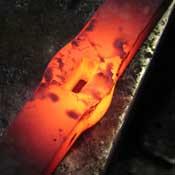
A mortise is made by hot punching the other piece of metal to be joined.
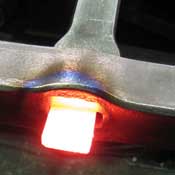
The tenon is heated and inserted in the mortise.
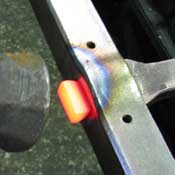
A sledgehammer is used to upset the tenon and rivet it over.
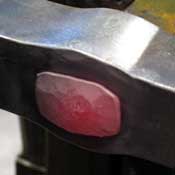
This shows the tenon after being riveted over and before it is cleaned up.
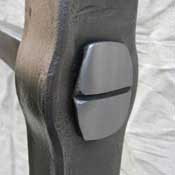
This is the completed joint. The riveted tenon has been given a satin polish whilst the groove chiseled into it is purely decorative.
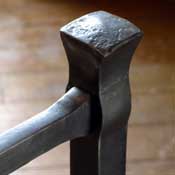
The wide shoulders of the tenon give the joints strength.
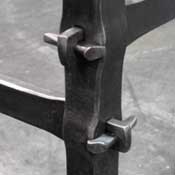
An alternative to riveting over the tenon is to punch a slot in it, then drive a wedge through this slot.
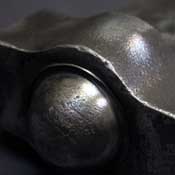
Alternatively, the tenon can be domed over to make a rounded rivet head.


